UlixertinibUnlocking the potential of ERK inhibition to deliver a new, durable treatment option for patients with MAPK pathway-driven cancers
Our lead program, ulixertinib (BVD-523), is a highly selective, potentially best-in-class inhibitor of ERK, the terminal node and master kinase of the mitogen-activated protein kinases (MAPK) pathway, one of the most prominently mutated pathways in cancer.
We have accumulated extensive clinical data for ulixertinib – across more than ten indications in both MAPK inhibitor-naïve and previously treated patients; and multiple mutations including NRAS, BRAF V600, BRAF non-V600-mutant, MEK, and NF1. Despite available therapies targeting KRAS, BRAF, and MEK in this pathway, resistance mechanisms that re-activate ERK signaling have limited the durability of response from these agents – which has led to renewed focus on therapeutic approaches that target the final node, ERK. Ulixertinib is distinguished from other ERK inhibitors by its superior selectivity, demonstrated tolerable and effective dosing profile, and a deep safety database across both monotherapy and combinations. We believe ulixertinib holds the potential to bring an important, new, durable treatment option to thousands of patients with MAPK pathway-driven cancers who currently have limited treatment options.
We have prioritized advancing three rare oncology indications:


Pipeline
Rare Oncology
Tumor Type
Monotherapy/
Combination Therapy
Preclinical
Phase 1
Phase 2
Phase 3
Tumor Type:
Histiocytosis
Monotherapy
Tumor Type:
Adult and pediatric glioma (LGG and HGG)
Monotherapy
Tumor Type:
Pediatric Low-Grade Glioma
Monotherapy
+ Vinblastine
+ Tovorafenib (RAFi)
Tumor Type:
Myelofibrosis
+ Ruxolitinib (JAKi)
PROGRAMS AT A GLANCE

Histiocytosis
Ongoing multi-site Phase 2 clinical study evaluating ulixertinib as a monotherapy for patients progressing on approved therapy
Multiple compassionate use examples showing monotherapy benefit in patients progressing on approved therapy

Low- and high-grade glioma
Blood-brain barrier penetrance demonstrated in adult LGG
Compassionate use and pediatric MATCH trial shows possible benefit in pediatric LGG
Ongoing monotherapy clinical study for both adult LGG and HGG
Pediatric LGG study, evaluating ulixertinib as a monotherapy and in combination with a standard-of-care chemo and RAF inhibitor, planned for 2026
LGG=low-grade glioma
HGG=high-grade glioma

Myelofibrosis
Combination with JAKi may be beneficial for patients progressing on approved therapy
Ongoing clinical trial in combination with ruxolitinib (JAKi)
Histiocytosis Close
Histiocytosis is a group of rare, cancer-like disorders driven by mutations in the MAPK pathway and characterized by an abnormal proliferation of immune cells known as histiocytes. The excess histiocytes can build up in various parts of the body, causing tumor growth and organ damage. For example, Erdheim-Chester Disease can affect the bones, kidneys, endocrine system, nervous system, eyes, lungs, and/or heart depending on where the histiocytes proliferate.1
Ongoing research evaluating ulixertinib as a potential treatment for histiocytosis was born out of a compassionate use request. Dr. Eli Diamond, an internationally recognized neuro-oncologist and early drug development specialist at Memorial Sloan Kettering Cancer Center (MSKCC), requested ulixertinib to administer as a monotherapy for multiple histiocytosis patients whose disease was not responding to other therapeutic approaches. Evaluation of the request led BVD to provide ulixertinib via the compassionate use program.
Compelling results from these cases were published in the prominent, peer-reviewed journal Cancer Cell, showing that four out of five histiocytosis patients benefited from treatment with ulixertinib.
The early efficacy signals observed in these patients inspired a multi-site investigator-initiated Phase 2 trial – underway at MSKCC, the Mayo Clinic, and the University of Alabama at Birmingham – to further evaluate ulixertinib in histiocytosis, potentially unlocking hope for an even greater number of histiocytosis patients.
1. https://my.clevelandclinic.org/health/diseases/24668-erdheim-chester-disease
Glioma Close
Gliomas are tumors that form in the brain or spinal cord. Some gliomas grow and spread slowly (low-grade) while others grow and spread quickly (high-grade). Gliomas can cause vision loss, difficulty walking or balancing, trouble speaking, personality changes, cognitive problems, seizures, and numbness. Many gliomas are life-threatening.2
Ulixertinib has shown potential in both adult and pediatric glioma, across multiple mutations including NF1, BRAF V600 and BRAF non-V600. It has also demonstrated the ability to penetrate the blood/brain barrier in adults with low-grade glioma. Along with our collaborators, we are advancing a clinical study of ulixertinib in adult patients impacted by both low- and high-grade glioma. A pediatric low-grade glioma trial is expected to be initiated in 2026.
2. https://my.clevelandclinic.org/health/diseases/21969-glioma
Myelofibrosis Close
Myelofibrosis is a rare blood cancer that causes scar tissue to form in the bone marrow, depleting its ability to produce the stem cells that become healthy red or white blood cells or platelets. Instead, the stem cells become cancerous cells. Myelofibrosis often progresses slowly, but it can transform into an aggressive acute leukemia. Common symptoms include anemia, an enlarged spleen and liver, easy bruising, frequent infections, and difficulty concentrating.3
Ulixertinib is being studied in combination with ruxolitinib, a JAK inhibitor, for the treatment of myelofibrosis. The investigator-initiated study is led by Dr. Raajit Rampal, M.D., Ph.D., a hematologist-oncologist with Memorial Sloan Kettering Cancer Center who specializes in the treatment of myeloproliferative neoplasms and leukemia.
3. https://my.clevelandclinic.org/health/diseases/15672-myelofibrosis
In this video, discover what differentiates ulixertinib from previously investigated ERK inhibitors – including on-target inhibition, twice-daily dosing, and proven combination potential. The video also includes a summary of the encouraging tolerability and clinical activity ulixertinib has shown in multiple indications and an overview of our ongoing development in rare cancers.
ERK INHIBITION
The MAPK Pathway
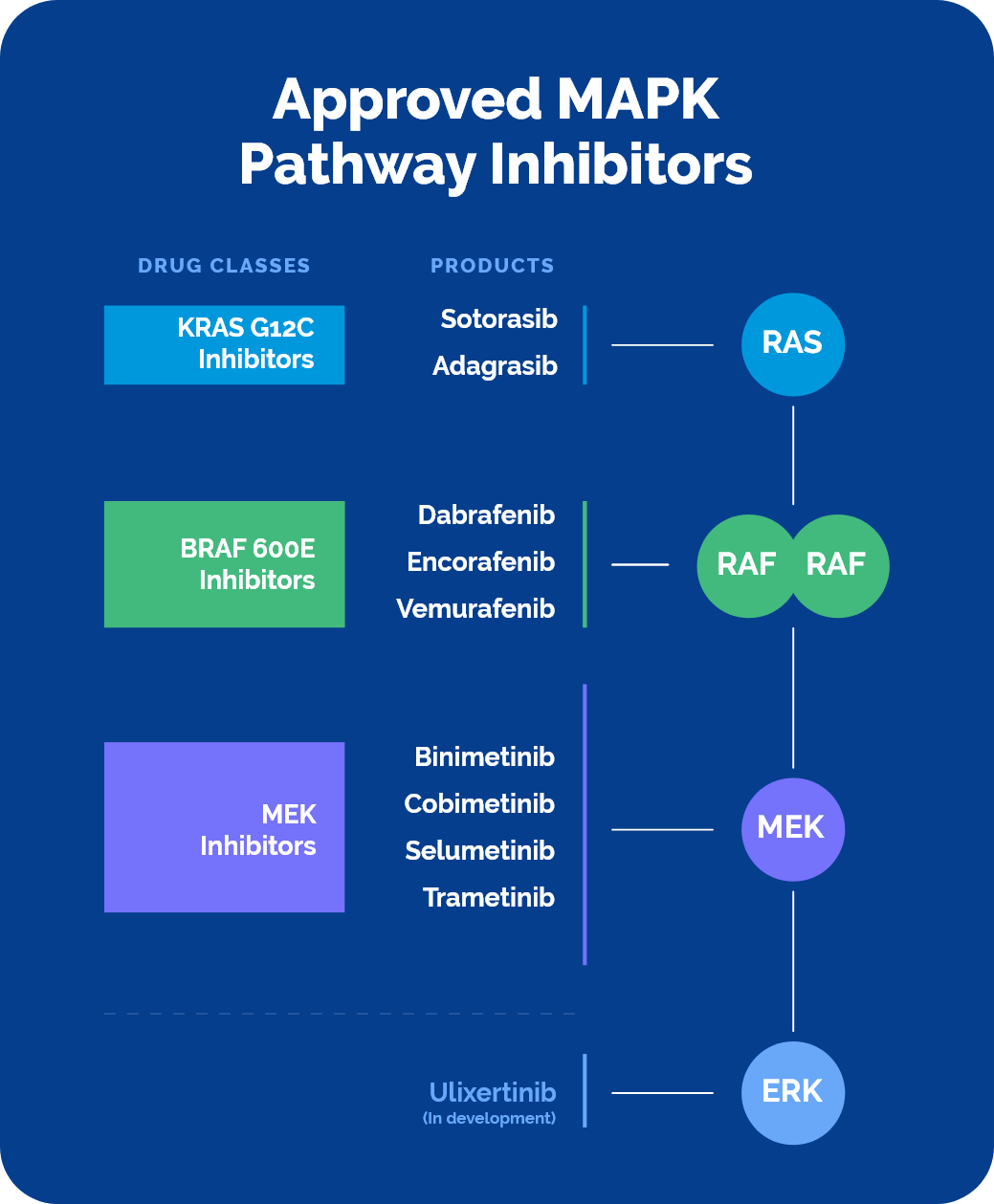
The MAPK pathway plays a major role in cancer development and progression, impacting millions of patients. This important pathway comprises a sequential cascade of four key signaling nodes – RAS, RAF, MEK, and ERK.
The last decade has seen the approval of precision therapies that target KRAS, BRAF, and MEK. Despite this notable progress, challenges presented by the complex MAPK pathway biology as well as limitations of current MAPK pathway-targeted therapeutics continue to leave many patients without effective therapies for their cancer treatment.
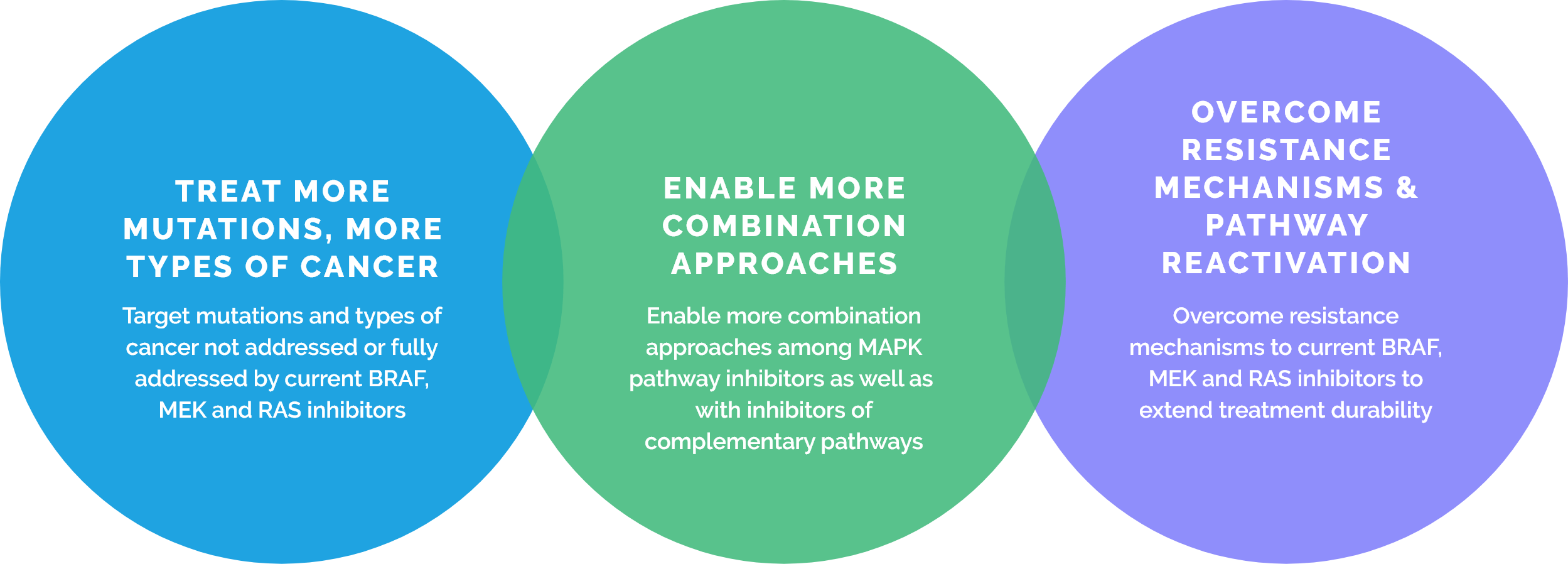
Direct inhibition of ERK, the final node of the MAPK pathway, represents an important potential strategy to overcome challenges such as resistance mechanisms and therapeutic limitations to tolerable, effective dosing.
Unmet Needs in MAPK Pathway Treatment Landscape
Resistance mechanisms to direct and upstream inhibition of the pathway have limited durability and patient benefit
Approved BRAF, KRAS, and MEK inhibitors continue to show limited durability, often due to resistance mechanisms that re-activate ERK signaling. Recent clinical experience with an explosion of investigational KRAS inhibitors provides further evidence that the majority of resistance mechanisms remain in the MAPK pathway and may, therefore, be overcome through ERK inhibition.
Tolerability and dosing challenges have made MAPK pathway combinations difficult to deploy in patients
Combinations of the various MAPK inhibitors with each other, or with the upstream inhibitors, is a viable approach to combat resistance, with some of these combinations approved. However, overlapping toxicities and subsequent suboptimal dosing to limit these toxicities, has made combinations with current therapies challenging to effectively deploy.
ERK inhibition is a critical and untapped strategy to address MAPK pathway cancers
Since ERK occupies the last node in the pathway, and many of the resistance mechanisms would still rely on ERK signaling to drive disease, a tolerable and effective ERK inhibitor represents an important strategy for the treatment of MAPK pathway-driven cancers.
In this video, explore the therapeutic potential of ERK inhibition in patients with intractable MAPK-driven cancers.
A FIRST-IN-CLASS MEDICINE
Ulixertinib’s Differentiated Profile
Ulixertinib has demonstrated ERK selectivity (ERK1, 2, and 8), with limited off-target inhibition, giving it a potent and highly selective on-target profile that distinguishes it from other ERK inhibitors.
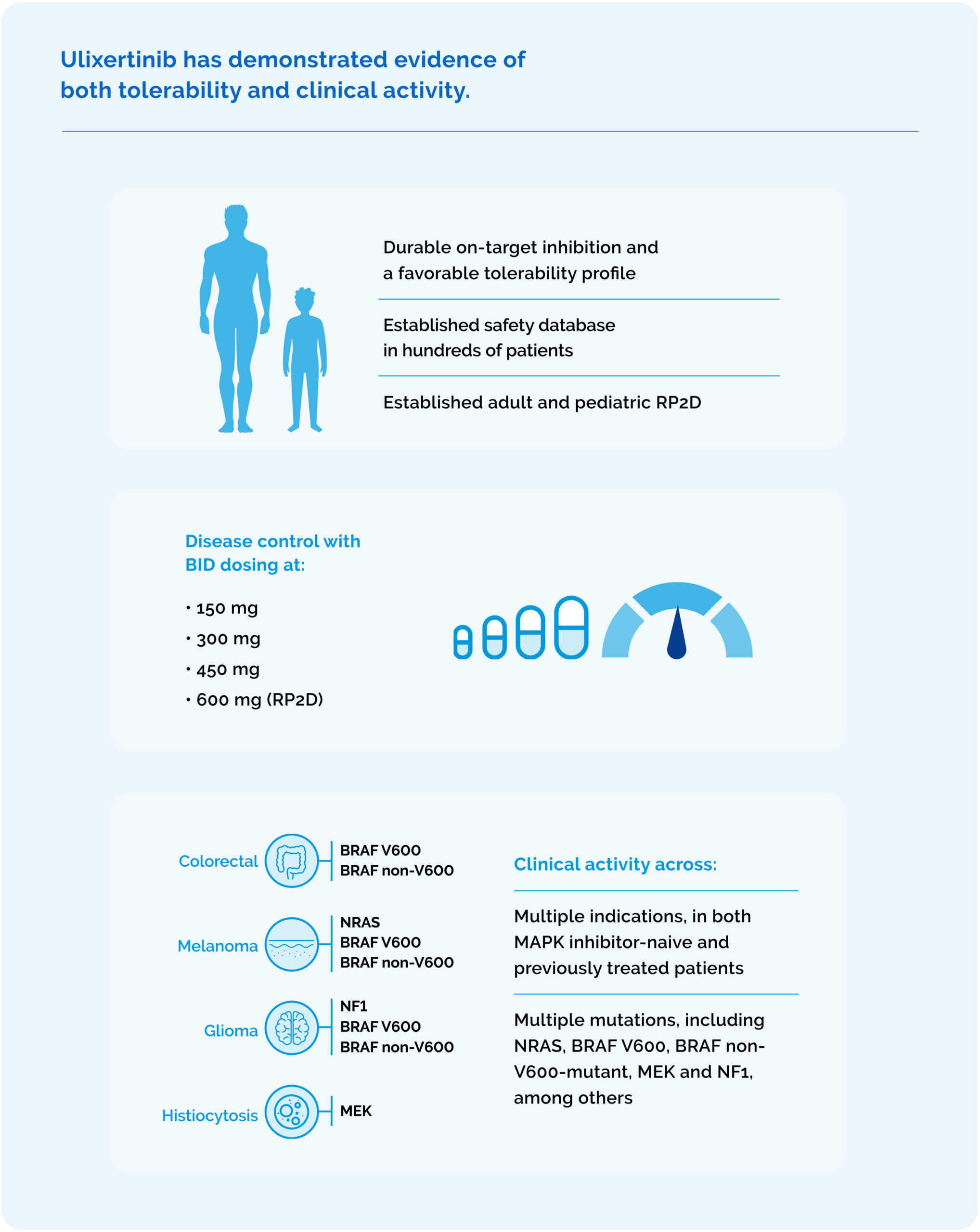
We have seen early evidence of ulixertinib’s differentiated highly selective profile translating to clinical activity and a favorable tolerability profile.
Ulixertinib’s Promise for Patients
CLINICAL DATA
Ulixertinib’s Class-Leading Clinical Activity and Data At-a-Glance
Ulixertinib’s demonstrated efficacy and tolerability in the clinic to date, which we believe is attributable to its highly selective inhibition of ERK selectivity, distinguishes this molecule from other investigational ERK inhibitors.
Pipeline
Other Solid Tumors
Tumor Type
Monotherapy/
Combination Therapy
Preclinical
Phase 1
Phase 2
Phase 3
Tumor Type:
All Solid Tumor Cancers
Monotherapy
+ I-O, Chemotherapy, BRAFi, EGFRi, CDK4/6i, and HCQ
Tumor Type:
Melanoma
+ Palbociclib
(CDK4/6 inhibitor)
Tumor Type:
Colorectal Cancer
+ EGFRi
+ EGFRi + BRAFi
I-O = Immuno-oncology; HCQ = Hydroxychloroquine